
Can You Bring Disposable Vapes on a Plane? TSA & Airline Rules
Posted by Vape 702 on Jul 30th 2026
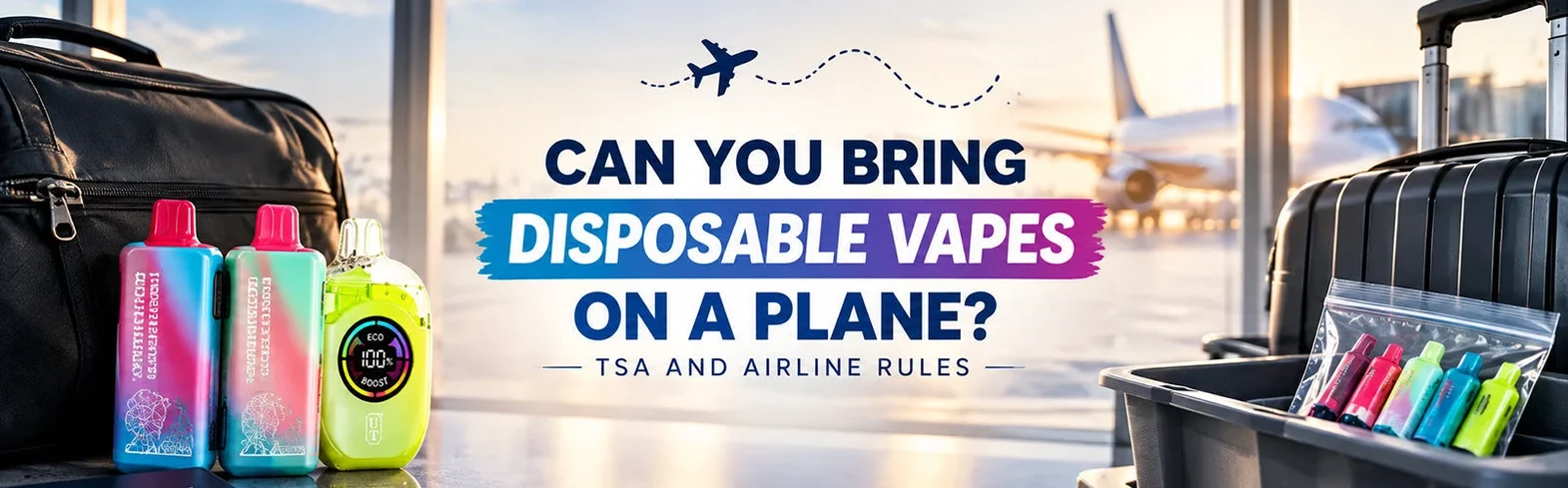
Yes, you can bring disposable vapes on a plane, but there's one rule that matters more than any other: they need to go in your carry-on, not your checked bag. Here's what the official guidance actually says, and how to make sure your device survives the trip.
TSA Rules: Carry-On vs. Checked Baggage
According to the TSA, electronic smoking devices are allowed only in carry-on baggage, and passengers are required to take effective measures for preventing accidental activation of the heating element of the device when transporting it.
On the battery side, each lithium ion battery must not exceed a 100 Watt-hour rating, or for lithium metal batteries, a lithium content of 2 grams. It's also worth noting that airlines can set their own limits on how many devices a passenger can carry for personal use, so it's worth a quick check before you fly.

One checkpoint detail worth knowing: disposable vapes don't need to come out of your bag for separate screening the way laptops do. They pass through the X-ray with your other carry-on items.
If you're carrying a higher-capacity modular or detachable-battery disposable, double-check its Wh rating before flying. Larger dock-and-pod systems can carry bigger cells than a standard single-use device, and the 100 Wh limit applies regardless of type.
Why Checked Baggage Is Restricted
The FAA notes that electronic smoking devices carried by passengers or crew must be kept on one's person or in carry-on baggage, and that spare lithium batteries must also be carried on one's person or in carry-on baggage, individually protected to prevent short circuits.
The reasoning is straightforward: if a battery were to short or overheat in the cargo hold, it wouldn't be noticed until the flight lands. In the cabin, a crew member can respond immediately.
Note that recharging these batteries or devices onboard the aircraft is not permitted either.
What Happens If You Vape or Charge Onboard
Using a vape at any point during a flight, lavatory included, is a federal offense, not a minor infraction. Per the FAA, the same smoking ban that applies to cigarettes applies to e-cigarettes and vapes on every flight.
-
Keep it in the cabin
-
Do not use it in flight
-
Do not charge it in flight
If your battery is low before a flight, charge it fully beforehand. Charging isn't permitted onboard even though carrying the device is.
Can You Vape Inside the Airport?
Individual airports set their own policy on vaping in terminals , TSA rules don't apply here. Most airports don't allow vaping in general terminal areas, treating it the same as smoking. Some larger airports have designated smoking areas that also permit vaping, but this varies by location. If it matters for your trip, checking your specific airport's policy ahead of time is the safest bet.
Even airports with a designated smoking area usually locate it outside security, shared with cigarette smokers. Once you clear security for your gate, that option is gone. Plan to vape before the checkpoint if you'll want to before a long flight.
International Travel and Destination-Country Rules
TSA and FAA rules only apply within the U.S. Some countries have their own restrictions on vaping devices and e-liquid, ranging from quantity limits to outright bans on possession. These rules vary widely and change over time, so it's worth checking your destination country's current regulations before you pack, particularly for international travel.
Some destinations enforce vape restrictions far more aggressively than others, and two are common U.S. traveler stops worth naming directly: For example, Singapore bans possession and use, not just sale; customs actively screens for devices and Thailand has a full ban on import, sale, possession & use since 2014.
Rules change often and vary widely outside these two. A quick search for your specific destination's current e-cigarette laws a week or two before departure beats assuming last trip's rules still apply.
How to Prevent Leaking in Carry-On or Checked Bags
Even though the device itself can't go in a checked bag, leaks can still happen in your carry-on due to cabin pressure changes:
-
Keep the device upright rather than laying it flat in your bag
-
Store it in a small sealed bag as an extra layer of protection
-
Avoid packing it against sharp or heavy items that could damage the tank
Quick Pre-Flight Checklist
-
Pack the device and any spare batteries in your carry-on, not checked luggage
-
Store it upright in a sealed bag to reduce leak risk
-
Check your destination country's rules if traveling internationally
-
Confirm your specific airport's policy if you plan to vape before or after your flight
If you're looking for something easier to travel with, our Disposable Vapes collection can be filtered by size and puff count to find a more compact, carry-on-friendly option.
FAQs
Can you bring a disposable vape in a carry-on bag?
Yes. The TSA permits electronic smoking devices in carry-on baggage, but they are not allowed in checked luggage.
Can you pack a vape in checked luggage?
No. Both TSA and FAA guidance prohibit electronic smoking devices, including disposables, in checked bags due to lithium battery fire risk.
Can you vape inside an airport?
Generally no. Most airports treat vaping the same as smoking and restrict it to designated areas where they exist, if at all. Policy varies by airport.
Do other countries have different rules on flying with vapes?
Yes. Some countries restrict quantities or ban vaping devices and e-liquid entirely. Always check the specific destination country's current rules before traveling internationally.